

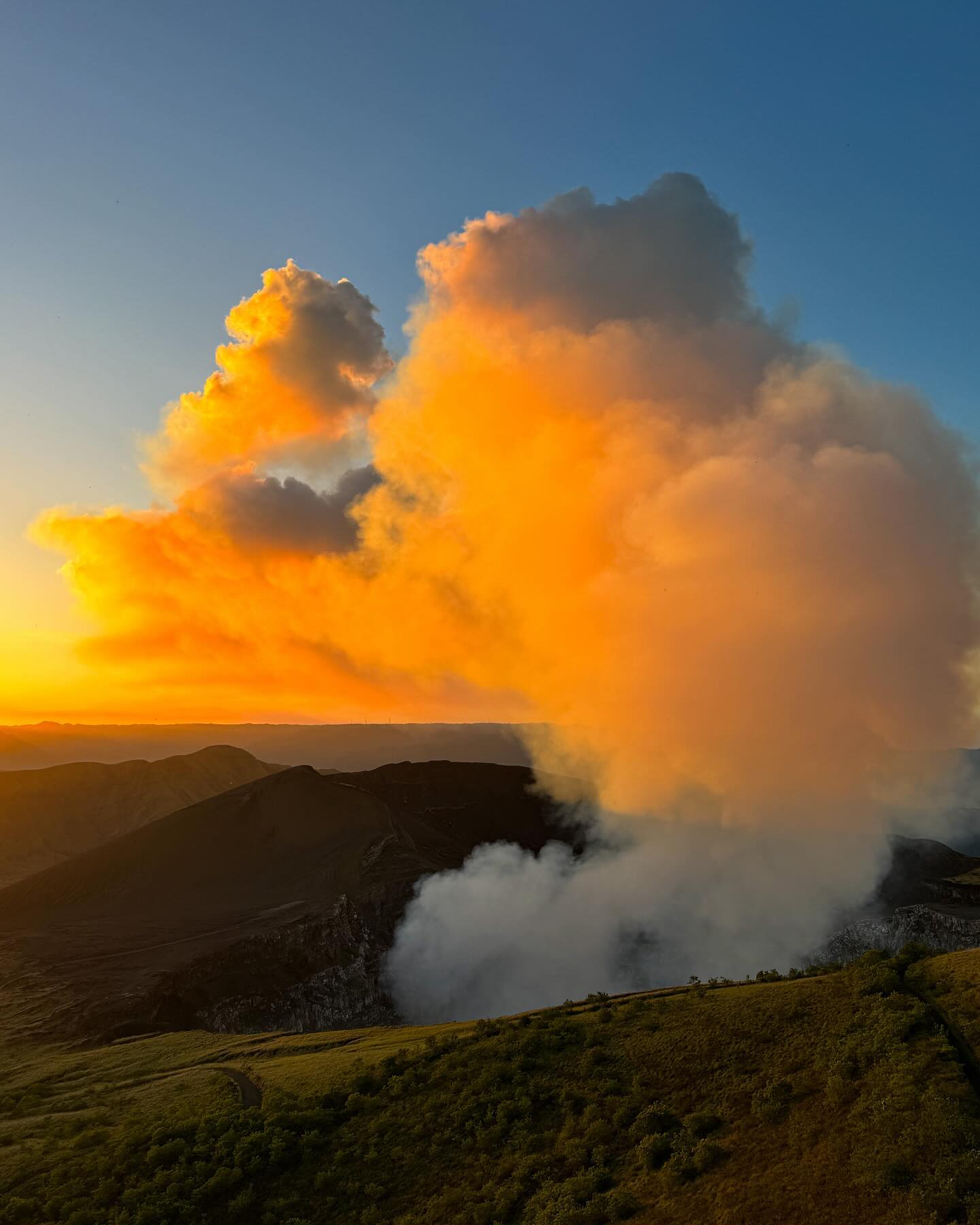
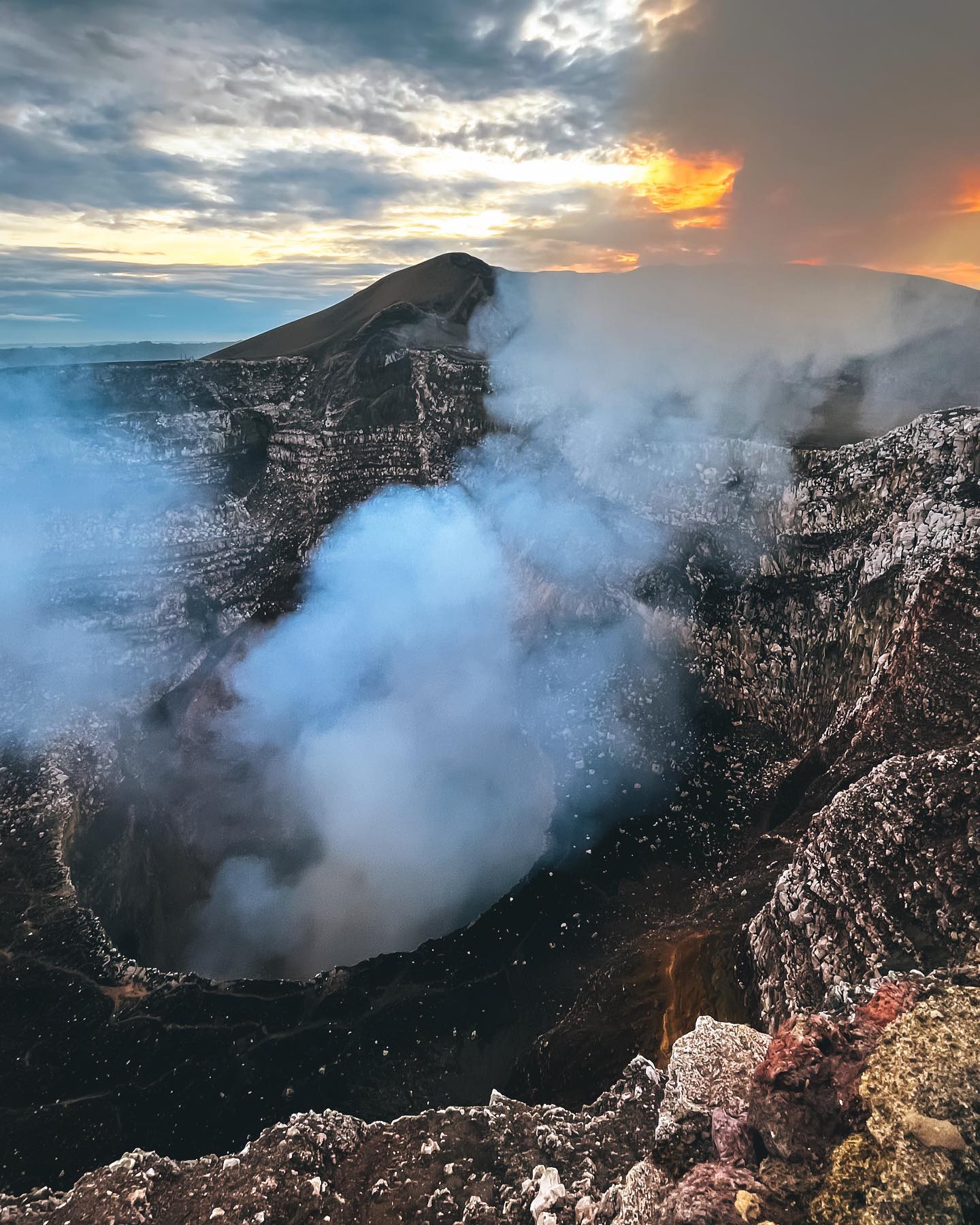
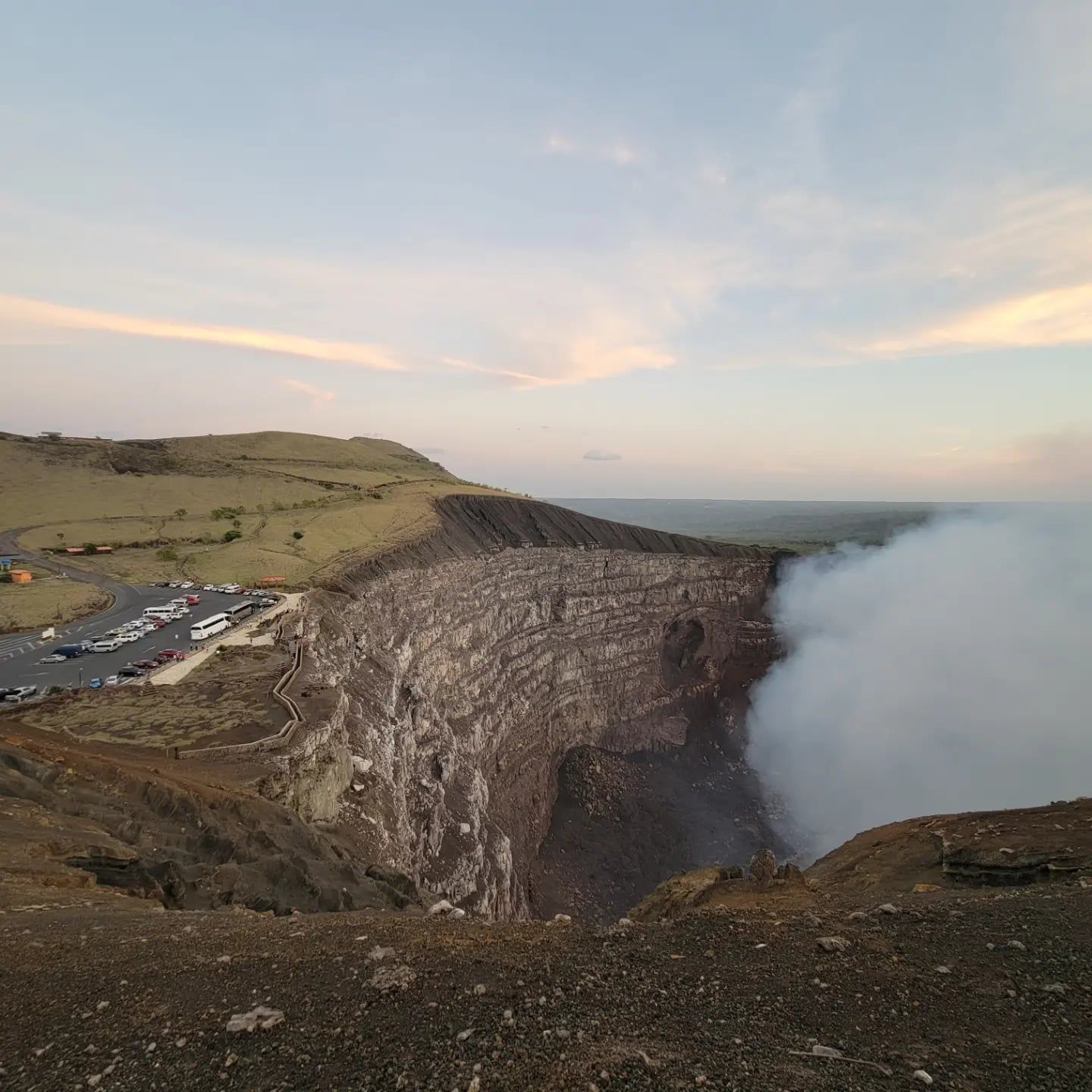
Located just 20 kilometers from Managua, this 54-square-kilometer national park allows visitors to drive directly to the edge of the active Santiago crater. Stand mere meters away from a bubbling lava lake and watch massive plumes of sulfur dioxide rise against the dark basaltic rock.
Find Guided ToursMasaya Volcano is an active complex volcano and caldera located 20 kilometers south of Managua, Nicaragua. Designated in 1979 as the country's first and largest national park, the 54-square-kilometer reserve contains a nested set of calderas and craters. The site's defining feature is the Santiago crater, which holds a persistent, glowing lava lake. Visitors can drive directly to the rim of this active crater, making Masaya one of the most accessible volcanic sites in the world.
The geological history of the volcano spans approximately 9,000 years. It sits along the Central America Volcanic Arc, formed by the subduction of the oceanic Cocos plate beneath the Caribbean plate. The broad basaltic caldera measures 6 by 11.5 kilometers and features steep walls up to 300 meters high. This massive depression formed about 2,500 years ago during an 8 cubic kilometer basaltic ignimbrite eruption. Today, the complex includes 13 vents and several main pyroclastic cones, including Masaya, Nindirí, San Fernando, and San Pedro.
Long before Spanish colonization, the indigenous Chorotega and Nawat peoples venerated the volcano. They referred to it as Popogatepe and performed human sacrifices to appease its fiery spirit. When Spanish colonizers arrived and first described the site in 1524, they named it "La Boca del Infierno," or The Mouth of Hell. In 1528, a Mercedarian friar named Francisco de Bobadilla erected a large wooden cross at the summit to exorcise what he believed was the devil.
Masaya has erupted at least 19 times over the centuries. The currently active Santiago crater is a relatively recent geological addition, forming between 1850 and 1853. Today, the park operates as a vital ecological reserve and an open-air laboratory. Volcanologists continuously monitor the site, studying its micro-earthquakes, sulfur dioxide gas emissions, and the bubbling magma that draws visitors to the crater rim.

Discover the full history and cultural significance on our About page.
Gaze directly into the active Santiago Crater to see a bubbling lava lake glowing in the dark. Visitors stand just meters from the rim, feeling the heat and hearing churning magma. Due to toxic sulfur dioxide emissions, time at this viewpoint is strictly limited to 5 to 15 minutes.
Ascend 280 concrete steps to reach the historic Mirador Cruz de Bobadilla. A Spanish friar erected this massive wooden cross in 1528 to exorcise the devil from the active volcano. The elevated vantage point provides panoramic views across the 54-square-kilometer national park, smoking craters, and solidified basaltic lava fields.
Walk the four-kilometer Coyote or Comalito trails, which take approximately two hours to complete. These paths cut through dry forest ecosystems and past steaming fumaroles. Hikers gain clear sightlines over the volcanic landscape, looking out toward Lake Managua and the distant Momotombo Volcano.
Book a certified local guide to descend into the dark depths of the volcanic complex. Inside the Tzinaconostoc Cave, travelers can observe geological formations left behind by ancient eruptions and encounter thousands of bats hanging from the rocky basaltic ceilings of these underground lava tubes.
Hand-picked tours with free cancellation and verified reviews
 Free Cancellation 8h
  Free Cancellation
  Free Cancellation 8h
  Free Cancellation 2h 30min
  Free Cancellation
  Free Cancellation 6h
  Free Cancellation
  Free Cancellation
 The optimal time to visit Masaya Volcano is from April to May and September to January. These periods provide comfortable weather and help visitors avoid the hour-long entrance wait times typical of the peak dry season.
March brings peak dry season crowds and entrance delays of up to an hour. April and May offer pleasant weather, fewer tourists, and lower prices for viewing the crater.
The peak wet season occurs during these months, bringing heavy rains. This precipitation frequently obscures views of the active lava lake with thick clouds and steam.
These months provide ideal conditions for visiting the national park. Travelers avoid peak tourist crowds while experiencing pleasant weather that makes hiking and crater viewing highly comfortable.
December and January offer excellent weather and manageable visitor numbers. February shifts into the peak dry season, drawing heavy crowds that cause wait times of up to an hour.
Masaya Volcano National Park operates daily in two distinct shifts. The daytime session runs from 8:30 AM to 4:30 PM (often listed as 9:00 AM to 4:45 PM). The nighttime session, which allows visitors to view the glowing lava lake in the dark, operates from 5:00 PM to 8:00 PM. These evening hours can occasionally shift to 4:30 PM to 8:30 PM depending on visitor volume at the entrance gate.
| Category | Price |
|---|---|
| Daytime Entry (Foreign Visitor) | C$150 (~$4 USD) |
| Daytime Entry (National) | C$50 |
| Nighttime Entry (Foreign Visitor) | $10 USD (370 córdobas) |
| Nighttime Entry (National) | $5 USD (180 córdobas) |
| Special Night Tour Package | Up to $25 USD |
Standard tickets can be purchased directly at the park entrance gate without advance booking. Due to continuous emissions of toxic sulfur dioxide gas, park rangers strictly limit time at the crater rim to 5 to 15 minutes per group. Exploring restricted areas, such as the underground lava tunnels, requires booking a certified local guide.
For complete schedules and ticket prices, visit our Hours & Fees page.
Masaya Volcano sits 20 kilometers south of Managua and is highly accessible by public transit, private taxis, or guided shuttles. Because walking from the main gate to the crater is strictly prohibited, all visitors must use motorized transport to reach the summit.
📍 Masaya department, Nicaragua (20 km south of Managua)
Travelers can board a local public bus from either Granada or Masaya heading toward Managua. These buses drop passengers directly at the national park entrance. Because walking along the paved road to the crater is strictly prohibited, you cannot finish the route on foot. Instead, visitors must hire a local driver at the main gate to reach the summit parking lot.
Hiring a private taxi or local driver provides a highly convenient method to reach the volcano from Granada or Managua. This option typically includes round-trip transportation and dedicated waiting time while you explore the park. Drivers bring you straight to the crater rim, bypassing the need to arrange separate summit transport. It is a practical choice for a straightforward two-hour excursion.
Organized group or private tours depart frequently from Managua, Granada, or Masaya. These excursions provide air-conditioned transport, hotel pickup, and a certified bilingual guide. Booking through local operators or online platforms simplifies the logistics significantly. The total price generally rolls in the park entrance fees, ensuring a seamless transit experience directly to the active viewing area.
For detailed transport options and routes, visit our Directions page.
Plan to reach the park entrance just before 5:00 PM to secure a prime viewing spot for the lava lake. This timing helps you avoid long queues from tour buses. You can watch the sunset over the volcanic landscape before the dark sky intensifies the glowing magma.
Walking along the paved road from the main entrance gate to the crater is strictly prohibited for safety reasons. Travelers arriving by public bus must hire a local driver at the gate. Expect to pay approximately $5 USD per person to reach the top parking lot.
Park rangers strictly enforce a viewing limit of 5 to 15 minutes at the active crater rim. The Santiago Crater continuously emits dense plumes of toxic sulfur dioxide gas. Prolonged exposure can cause severe respiratory distress, so keep your visit brief and follow official instructions.
Local park regulations mandate that all vehicles at the summit parking lot must face downhill in the designated lanes. Sudden explosive activity and ash emissions can occur without warning. This parking orientation ensures a rapid and orderly evacuation if an emergency arises during your visit.
The park features paved pathways, and the main viewing platform at the crater rim is wheelchair accessible. Be aware that the concrete safety wall stands just over one meter high. This height can partially obstruct the direct view of the active lava lake for seated individuals.
Bring sturdy, closed-toe athletic shoes if you plan to hike the four-kilometer Coyote or Comalito trails. The terrain consists of loose volcanic gravel, steep inclines, and jagged basaltic rocks. Pack high-SPF sunscreen and plenty of bottled water, as the volcanic landscape offers very little shade.
Sitting directly at the foot of the volcano complex, this water-filled lagoon provides a quiet natural escape. Visitors can admire scenic water views framed by dramatic volcanic cliffs and green forests.
Located in the neighboring city of Masaya, this enclosed market serves as a central hub for traditional Nicaraguan handicrafts. The stalls feature local pottery, hand-woven hammocks, wood carvings, and clothing.
This pristine volcanic crater lake is known for its clear, warm waters and tranquil atmosphere. It functions as an ideal location for swimming, kayaking, and relaxing at waterfront nature resorts.
Read what travelers share about their experience visiting Masaya Volcano — from practical tips to personal highlights.


The entrance fee depends on the time of day. Daytime entry from 8:30 AM to 4:30 PM costs C$150 (about $4 USD) for foreigners and C$50 for locals. For the evening lava viewing slot between 5:00 PM and 8:00 PM, the fee is $10 USD for foreigners and $5 USD for nationals.
The park operates in two daily shifts. The daytime session runs from 9:00 AM to 4:45 PM, followed by the nighttime session from 5:00 PM to 8:00 PM. Visitors are strictly limited to 5 to 15 minutes at the crater rim due to toxic sulfur dioxide fumes.
Walking from the main entrance gate to the summit is strictly prohibited for safety reasons. You must drive a vehicle, arrive with an organized tour, or hire a local driver at the gate for approximately $5 USD per person to reach the parking lot.
You can take a public bus for $1 USD, hire a private taxi for $20 to $40 USD, or book a tour operator shuttle for $25 to $80 USD. The drive from Granada covers roughly 20 to 23 kilometers and takes 30 to 45 minutes by taxi.
Pack plenty of bottled water, high-SPF sunscreen, and a wide-brimmed hat, as the volcanic landscape offers very little shade. Wear sturdy, closed-toe athletic shoes or hiking boots if you plan to hike the 4-kilometer Coyote or Comalito trails.
The park is highly accessible, with vehicles driving directly to the summit parking lot just a 30-second walk from the crater rim. The visitor center features ramps, and the paved viewing platform accommodates wheelchairs, though a concrete safety wall just over one meter high may partially obstruct the view for seated individuals.
No special permits or advance bookings are required for standard day or night visits. You can purchase tickets directly at the park entrance gate. However, if you want to explore restricted areas like the underground lava tunnels, you must book a certified local guide.
The ideal months to visit are from April to May and September to January. Visiting during these periods helps you avoid the peak dry season crowds of February and March, which can cause wait times of up to an hour at the park entrance.
Browse verified tours with free cancellation and instant confirmation.
Find Tours